


Why Black Friday attracts attackers
Black Friday concentrates an unusual volume of traffic, transactions and fraud signals. For owners of WooCommerce and PrestaShop stores this creates a window of opportunity: credential theft, payment page injection, order hijacking and brand impersonation. Operational pressures — surge in plugins, delayed updates, and overstretched staff — increase the likelihood of human error and security gaps.
Understanding attacker motivations helps prioritize defenses. Criminals favour automated, low-noise attacks such as cloned storefronts, fake payment redirections and targeted phishing of support agents. They don’t need advanced exploits when weak authentication, unpatched extensions or absent monitoring are present.
The 7 attacks you must know and how they work
1) Cloned sites and typosquatting
Cloned storefronts replicate your shop on a similar domain to intercept customers or collect payment details. These lookalike pages may host fake forms or redirect customers to attacker-controlled payment endpoints. Traffic often originates from compromised marketing emails, fraudulent PPC ads and poisoned search results.
Because WooCommerce and PrestaShop themes and templates are widely available, a clone can look convincing quickly. The differences are usually in the URL, TLS certificate or payment flow logic.
2) Targeted phishing against customers and support
Black Friday phishing is highly targeted: messages announcing exclusive deals, fake order confirmations, or urgent delivery notices entice clicks. Support teams are also targeted using emails that appear to come from vendors or payment providers, to obtain admin access or credentials.
Consequences range from card theft to administrative access that enables site backdoors and content manipulation.
3) Brand impersonation and fake social accounts
Attackers create social pages, ads and messages that use your brand to lure customers. These fake accounts redirect to external landing pages or solicit payment via nonstandard methods. Social spread can outrun takedown requests during peak shopping.
Shops using short links, printed QR codes or third-party influencers are especially exposed.
4) Fake delivery messages and logistics scams
Fake SMS or email delivery notices (smishing) increase during peak commerce. They ask recipients to click to reschedule or pay a surcharge, leading to phishing sites or malware payloads.
If API keys for tracking services are leaked, attackers may even send bogus notifications in your name.
5) Code injection via plugins and themes
Unmaintained extensions are a common vehicle for code injection. A modified plugin file can exfiltrate payment data or alter shipping addresses. The risk escalates when a compromised plugin has write permission to site files.
Minimize third-party code and keep core platforms and plugins updated.
6) Compromised admin and support accounts
High-privilege accounts are the most valuable targets. Weak authentication, lack of MFA and prolonged sessions facilitate account takeover. Once inside, attackers may change payment pages, create fraudulent coupons, or manipulate orders.
Unmonitored FTP/SFTP and third-party admin tools are additional attack vectors.
7) Brute-force and credential stuffing attacks
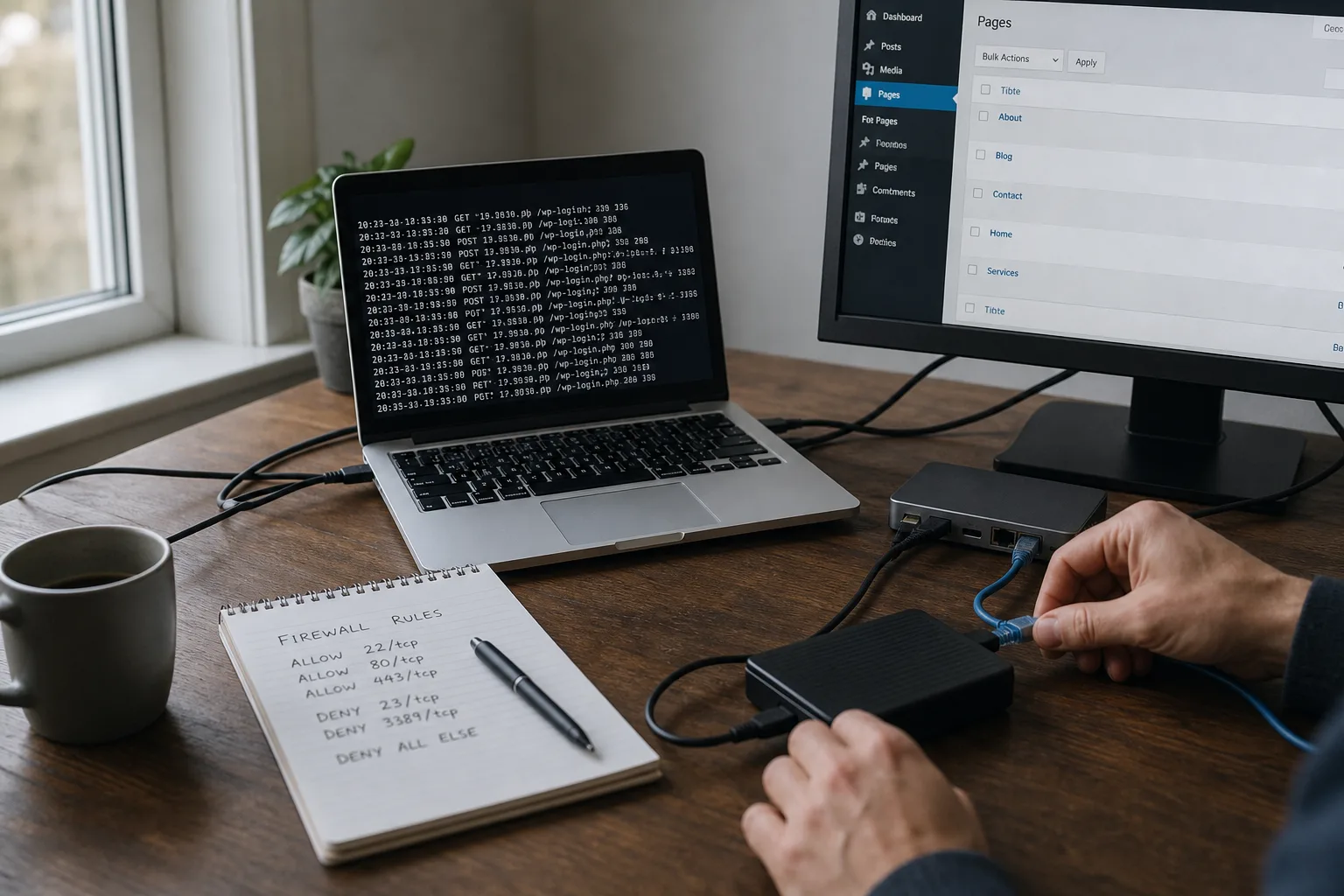
Credential stuffing campaigns spike at Black Friday, exploiting password reuse. Without rate limiting and bot protection, a site may allow thousands of attempts and reveal valid accounts, leading to account misuse and fraud.
For WooCommerce shops that store payment tokens, a compromised account can be used to make purchases even without full card details.
Platform-specific nuances for WooCommerce and PrestaShop
Both platforms share common vectors (third-party modules, themes, public exposure) but differ in ecosystem dynamics. WooCommerce inherits WordPress’ large plugin marketplace: diversity is a strength and a potential weakness. PrestaShop’s module system and different back-office layout create other specific risks, particularly with custom modules.
In both cases, test updates in a staging environment. Deploying an untested update to production during Black Friday is a risky choice.
Priority protection plan before the peak
-
Perform tested, complete backups stored offsite, with dated restore points and a validated restore procedure.
-
Apply critical updates in staging first, then deploy to production in a controlled window before the peak.
-
Enforce multi-factor authentication (MFA) for all administrative accounts and for external provider portals (bank, ERP, shippers).
-
Audit and disable unused plugins/modules; keep only necessary, actively maintained extensions.
-
Deploy a Web Application Firewall (WAF) and anti-bot rules to limit credential stuffing and scans.
-
Enable real-time file-change monitoring and alerting for new routes and redirects.
-
Validate TLS and HSTS settings, check certificates and DNS records (SPF, DKIM, DMARC) to reduce email-based phishing.
-
Prepare verified customer communications channels to rapidly address fake accounts and fraudulent listings.
Detection and response during the event
Quick detection often separates a minor incident from a commercial crisis. Monitor anomalies: spikes in requests to payment endpoints, new referrer URLs, sudden PPC traffic, and unauthorized file changes. Assign a security operations lead with clear responsibilities for blocking, restoring and customer communication.
If a payment module is compromised or a suspicious redirect is found, place the shop into maintenance, disable affected payment methods and post transparent customer notices. Preserve logs for forensic analysis rather than deleting them impulsively.
Post-incident measures and communication
After an incident, assess exposed data, notify affected customers according to local laws and provide concrete actions (password resets, account monitoring). Commission a professional audit to identify root cause and implement fixes and penetration testing before fully reopening.
Measured transparency is crucial: provide factual updates without panic, outline remediation steps and prevention measures.
Organizational best practices and human factors
Technical controls alone are insufficient without process and training. Train sales and support teams to spot phishing and follow authentication procedures. Limit production access to essential personnel and review temporary access rights. Prepare a continuity plan describing how to handle surges in orders, returns and refunds without undermining security.
Consider managed monitoring and incident response partners for 24/7 coverage and forensic expertise often missing in-house.
Short checklist before launching promotions
-
Verify backups and restoration process are functional.
-
Test security updates on a production clone.
-
Enable MFA and revoke old sessions.
-
Disable unnecessary payment methods and validate webhooks.
-
Configure anti-bot protections and WAF rules.
-
Prepare customer communications and escalation procedures.
Conclusion
Black Friday 2026 will be a high-risk period for WooCommerce and PrestaShop stores: increased traffic and promotional activity attract a range of attacks from cloned sites to targeted phishing and plugin tampering. Prioritize preparation: tested backups, controlled updates, MFA for critical access, and real-time monitoring to detect anomalies quickly.
Security during a sales peak requires a combination of technical, organizational and human measures. Don’t wait for an incident to define your response: document processes, minimize access, train teams and secure external support when necessary. These steps significantly reduce financial and reputational impact and enable rapid recovery if an attack occurs.